

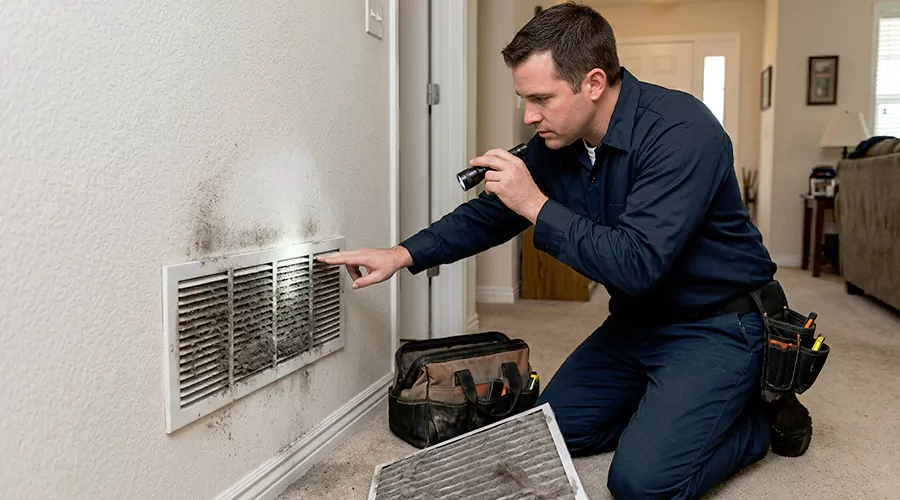
Dusty air vents are usually caused by household particles collecting around vent openings as air circulates through the HVAC system. Dust from carpets, furniture and everyday activities can accumulate on vent covers over time. Poor filtration, leaking ducts and high indoor dust levels may also contribute to the problem. Although light dust buildup is normal, excessive deposits that return quickly after cleaning may indicate an issue that needs attention.
Air vents play an important role in distributing conditioned air throughout your home. Supply vents deliver heated or cooled air into rooms, while return vents collect indoor air and direct it back toward the HVAC equipment. Because air constantly moves through these openings, some particles naturally settle on their surfaces. Understanding the difference between ordinary dust accumulation and a potential HVAC problem can help you avoid unnecessary maintenance expenses.
What Are the Main Causes of Dusty Air Vents?
Dust collects around air vents when airborne particles settle on their surfaces or become trapped near the grille openings. The amount of buildup depends on household activity, filtration efficiency and the condition of the duct system. Some causes are related to normal indoor conditions, while others involve maintenance problems that allow additional particles to circulate.
Household Dust and Indoor Activities
Everyday activities generate dust that eventually settles on furniture, floors and air vents. Walking across carpets releases trapped particles into the surrounding air, while upholstered furniture and clothing shed small fibers. These materials can remain suspended long enough to travel toward HVAC openings. Homes with pets may experience additional buildup because animal hair and skin particles become part of the indoor dust mixture. Frequent movement through busy rooms can also increase the amount of dust reaching nearby vents.
Dirty or Improperly Installed Air Filters
Air filters capture particles before they pass through certain HVAC components, but their performance depends on proper installation and regular replacement. A heavily loaded filter increases resistance to airflow, which can affect how efficiently the system operates. More importantly, an incorrectly sized filter may leave gaps around its frame that allow some air to pass through without filtration. When this happens, particles can reach downstream equipment and ductwork. Checking the filter's condition and fit is a practical first step when unusual dust accumulation becomes noticeable.
Leaking Air Duct Connections
Ductwork can develop gaps because of poor installation, damaged joints or aging materials. Return-side leaks are particularly important because they can draw dusty air from attics or crawlspaces into the HVAC system. These areas may contain insulation particles and accumulated dirt that would not normally enter the conditioned living space. As the blower operates, unwanted particles can travel through the return path and contribute to contamination inside the equipment. Repairing identified leaks addresses the source rather than repeatedly removing dust from visible vents.
Dust From Home Renovations
Construction and remodeling projects can temporarily increase indoor dust levels. Activities such as drywall sanding and flooring installation release fine particles that easily travel between rooms. If the HVAC system operates while this work takes place, exposed return openings may draw some of those particles into the duct system. Dust can continue appearing on vent covers even after the renovation is complete because fine material remains on surrounding surfaces. Thorough cleanup and proper protection of HVAC openings can reduce this type of buildup.
Condensation Around Cold Air Vents
Cold supply vents sometimes develop moisture when humid room air contacts the grille. This moisture can make airborne particles stick to the surface instead of passing by or falling away. Over time, the deposits may create dark staining around the vent edges or on nearby ceiling paint. Persistent condensation can also damage surrounding materials and should not be treated as a simple dust problem. Checking indoor humidity and investigating unusually cold or poorly insulated surfaces can help identify the cause.
Why Do Some Air Vents Collect More Dust Than Others?
Air vents do not collect dust at the same rate because their locations and airflow directions are different. A return grille in a busy hallway may handle air from several rooms, while a supply vent in a guest bedroom may receive less exposure to indoor dust. Floor vents also collect particles that fall directly into their openings. These differences explain why one vent can look much dirtier than another without indicating a serious mechanical problem.
The design of the grille also affects how visible the deposits become. Narrow openings and angled slats create surfaces where particles can settle. Dust tends to be more noticeable on light-colored vent covers, especially when it forms dark streaks around the edges. Comparing the condition of several vents can help determine whether the buildup reflects normal room activity or an unusual pattern.
| Vent Location | Common Dust Pattern | Possible Explanation |
|---|---|---|
| Hallway return vent | Dust covering grille openings | Indoor particles drawn toward the return |
| Ceiling supply vent | Dark deposits around edges | Particle accumulation along airflow paths |
| Floor vent | Hair and loose debris inside openings | Dust settling directly into the grille |
| Kitchen vent | Sticky dust deposits | Cooking residue trapping airborne particles |
| Bathroom vent | Dark staining and moisture | Condensation around cold surfaces |
| Vent near renovation work | Fine powder accumulation | Construction dust spreading through the home |
How Does Dust Buildup Around Air Vents Get Worse?
Dust accumulation usually starts with a light coating on the grille. As more particles settle, the deposits become thicker and may begin covering narrow openings. In most homes, surface dust remains a housekeeping issue rather than a mechanical failure. Problems become more concerning when substantial debris restricts airflow or when particles repeatedly blow into occupied rooms. The rate of accumulation depends on indoor conditions, so there is no fixed timetable for when a dusty vent requires deeper attention.
| Stage | What Happens | Recommended Action |
|---|---|---|
| Early stage | A thin dust layer forms on the grille while airflow remains normal. | Clean the cover and inspect the filter. |
| Developing stage | Dust returns quickly or begins collecting behind the opening. | Check indoor dust sources and filter condition. |
| Advanced stage | Heavy debris blocks part of the grille or enters the room during operation. | Investigate the airflow path and possible contamination. |
A useful distinction is whether the dust remains attached to the grille or moves into the room when the HVAC system runs. Surface deposits generally respond to routine cleaning, while recurring particle discharge suggests that the source may be somewhere inside the airflow path. Even then, the problem should be identified before deciding whether duct cleaning is necessary.
How Much Does It Cost to Fix Dust-Related Problems?
The cost depends on whether the issue involves ordinary surface dust or an underlying duct problem. Cleaning accessible vent covers typically requires only basic household supplies, while hidden leaks and damaged duct sections may require specialized work. Broad U.S. estimates for 2026 place duct leakage testing at approximately $115 to $450 and some ductwork repairs at $200 to $2,100. Whole-system duct cleaning projects may cost around $271 to $509 in typical cases, although the price depends on system size and the actual work required. These are different services rather than stages that every dusty vent will eventually require.
What Are the Warning Signs of Excessive Dust Around Vents?
Most dusty vents do not indicate a serious HVAC problem, but certain symptoms deserve further investigation. Repeated debris buildup becomes more meaningful when it occurs with weak airflow or unusual odors. Checking several signs together provides a better indication of whether the issue is limited to housekeeping or involves equipment that needs inspection.
Common warning signs include:
- Dust returns unusually quickly after the vent cover has been cleaned.
- Loose particles visibly blow into the room when the HVAC system starts.
- A supply vent delivers noticeably weaker airflow than similar openings.
- Thick debris accumulates behind the grille rather than only on its surface.
- Dark stains repeatedly develop around the vent edges or ceiling.
- The HVAC filter has visible gaps around its frame.
- Musty odors appear repeatedly during heating or cooling operation.
- Water marks or dampness develop around a vent opening.
- Filters become heavily loaded sooner than expected.
- Accessible duct connections appear loose or damaged.
These warning signs can have different causes. For example, dark staining may result from airborne particles collecting on a cold surface, while weak airflow can develop because of restrictions elsewhere in the system. Recording when the symptoms appear and whether they affect multiple rooms can help narrow down the problem.
How Can You Check Dusty Air Vents Yourself?
A simple inspection can help determine whether the dust is limited to the vent cover or extends into the nearby duct opening. Most homeowners can complete this check using a flashlight and ordinary cleaning supplies without opening HVAC equipment. The goal is to observe the condition of accessible surfaces and identify anything that appears unusual. Avoid reaching deep into ducts or disturbing internal insulation because these materials may be damaged by aggressive cleaning.
Follow these steps:
- Turn off the HVAC system. Use the thermostat and wait until the blower stops before inspecting an opening.
- Examine the vent cover. Look for loose dust or unusual dark staining and check whether material extends behind the grille.
- Clean the accessible surfaces. Use a soft vacuum attachment and a slightly damp microfiber cloth on suitable grille materials.
- Inspect the air filter. Confirm that the filter is the correct size and sits securely in its housing.
- Compare nearby vents. Examine openings in different rooms to identify unusual differences in dust accumulation.
- Monitor the results. Photograph the cleaned grille and check it again after approximately one week.
This basic inspection may reveal an obvious source, such as construction dust collecting inside a floor opening or a poorly fitted filter. However, it cannot identify every type of contamination or hidden duct problem. If substantial debris continues entering the room, further evaluation may be necessary.
When Should You Call an HVAC Professional?
Professional inspection is appropriate when heavy debris repeatedly blows out of supply vents or when dust buildup occurs alongside persistent airflow problems. Moisture inside ductwork and suspected biological contamination also require attention because ordinary surface cleaning will not address their causes. A qualified HVAC technician can examine accessible components and measure airflow conditions to determine whether the problem involves filtration or damaged ducts.
Depending on the symptoms, an inspection may include checking filter bypass, examining the blower compartment and testing for duct leakage. If significant contamination is confirmed, specialized cleaning equipment may be needed to remove material without spreading it through the living space. However, light dust deposits alone do not establish a need for whole-system cleaning. The decision should be based on the actual condition of the ductwork and the source of the problem.
How Can You Prevent Air Vents From Getting Dusty?
Reducing dust buildup requires a combination of household cleaning and HVAC maintenance. Vent covers will continue collecting some particles during normal operation, but controlling indoor dust levels can make deposits less noticeable. Keeping filters properly installed and addressing damaged duct connections also helps prevent unwanted particles from entering the air circulation system.
Maintain the HVAC Filter
Inspect the HVAC filter approximately every 30 days during periods of frequent heating or cooling, especially when the home has pets or recent renovation dust. Replace the filter when it becomes heavily loaded or reaches the manufacturer's recommended replacement interval. Make sure the replacement is the correct size and fits securely in its designated slot without leaving gaps around the edges. A filter that sits crooked can allow some air to bypass the material, reducing its ability to capture particles before they reach downstream HVAC components.
Keep Vent Covers and Surrounding Areas Clean
Vacuum accessible vent covers during routine housekeeping to remove loose particles before they form thicker deposits. Use a soft brush attachment to clean narrow openings and wipe washable surfaces with a slightly damp microfiber cloth when necessary. Cleaning nearby carpets and furniture also reduces the amount of material available to circulate through the room. Regular attention to these surrounding surfaces is often more effective than repeatedly wiping the vent while leaving nearby dust sources untouched.
Reduce Dust During Home Improvements
Protect supply and return openings during major dust-producing renovation work while the HVAC system is switched off. Keep construction areas separated from occupied rooms when practical, and remove accumulated dust before restoring normal airflow. Once the project is complete, clean surrounding surfaces thoroughly because fine particles may continue circulating if they remain on floors or furniture. Remove all temporary vent coverings before restarting the heating or cooling system.
Address Duct Leaks and Moisture
Inspect accessible duct connections during seasonal HVAC maintenance and pay attention to any visible gaps or disconnected sections. Repairing confirmed return-side leaks helps prevent dusty air from entering the system through unintended openings. Condensation around supply vents also deserves investigation because persistent moisture can stain nearby surfaces and damage building materials. Maintaining suitable indoor humidity and correcting water problems can reduce the conditions that allow dust to adhere to damp surfaces.
Conclusion
Dusty air vents usually result from normal household particles collecting around moving air. Light surface buildup is common and rarely indicates serious duct contamination. However, recurring debris or unusual airflow changes deserve closer inspection. Start by cleaning the vent covers and checking the filter. If problems continue, professional evaluation can help identify the source. This week, inspect several vents and compare their condition after cleaning.